CMA welcomes eight additional months of transition time and calls for changes to the two-day deadline
Berlin, Düsseldorf, Brussels, 26 November 2026 – Recycling companies in the EU are to be given more time to switch to digital waste shipment procedures. They had previously been required to use the EU’s DIWASS system for Annex VII documents from 1 January 2027. This requirement is now set to begin on 1 September 2027. Participants at an expert meeting with the European Commission agreed on this on 25 November. The Circular Metal Association (CMA) welcomes the decision, which responds to concerns raised by Member States and businesses about a mandatory start at the turn of the year.
Annex VII documents accompany shipments of Green List waste for recovery. These include a substantial proportion of cross-border trade in recycled metals. The new Waste Shipment Regulation (EU) 2024/1157 provides for these documents to be exchanged entirely electronically via DIWASS in future. The system has been operational since 21 May 2026. In practice, CMA member companies have since experienced significant technical problems with the system. The Annex VII document module initially operated only in a test environment and has only been available in the production environment since 15 November 2026.
Voluntary use, no penalties
Under the agreement reached, use of DIWASS will remain voluntary until 31 August 2027. Paper versions and hybrid procedures will continue to be permitted. Documents created in DIWASS can be downloaded as PDFs. The other parties involved in a shipment can then complete their fields either in the system or on paper. The meeting participants agreed that those who do not submit Annex VII documents via DIWASS during this period should not be penalised. However, every shipment must be accompanied by a properly completed Annex VII document, whether digital or on paper.
The expert meeting participants expressly encourage companies to use the module during the transition period. The competent authorities are also encouraged to familiarise themselves with the user interface or connect their own systems via an interface as soon as possible. All parties should be ready for mandatory use from 1 September 2027.
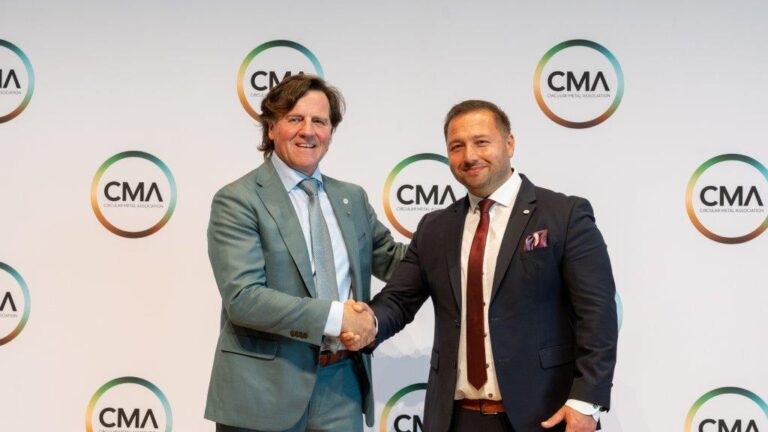
“The postponement gives the sector some breathing space. But even with more time, DIWASS remains fundamentally flawed in its current form,” says CMA President Murat Bayram. “Our member companies handle a large number of shipments every day. DIWASS has repeatedly caused technical problems since its launch, and the Annex VII module has only been live since mid-November. A system like this cannot be made mandatory within six weeks – either for companies or for authorities. A troubled start would have disrupted supply chains for recycled raw materials on which industry relies.”
CMA calls for consistent application
However, the postponement is only beneficial if it applies equally across all Member States. This is not guaranteed: the transitional arrangement is based on an agreement by the expert group, not an amendment to the Regulation. CMA therefore believes it is up to the national authorities to apply it consistently.
“A single market for recycling only works if the same rules apply at every border,” says Bayram. “The authorities must make use of the transition period just as companies do. DIWASS must work for both sides by 1 September 2027.”
Two-day deadline remains unresolved
The agreement reached at the expert meeting is silent on an issue of particular concern to the sector. Under the Waste Shipment Regulation, the person who arranges a shipment must complete the Annex VII document at least two working days before the shipment begins. In many cases, this deadline is difficult to meet in the recycled metals trade. Loads are often scheduled at short notice, for example to avoid empty journeys or to get material to the customer quickly.
CMA therefore calls for the two-day deadline to be abolished or at least made flexible enough to allow shipments at short notice. As the deadline has already been in force since May 2026, CMA believes the Commission should clarify the issue promptly, rather than waiting until mandatory DIWASS use begins in September 2027.
__________________________
About the CMA
The Circular Metal Association is Europe’s leading industry association for steel and metal recycling. Nearly 900 member companies cover the entire spectrum: from collection and processing to trading and supplying the metal and steel processing industries. Around 90 per cent of the industry companies active in the market are organised within the CMA. Its members supply the recycled raw materials that European industry relies upon – making them an indispensable component of the European raw materials sector. The CMA was formed from the merger of the Federal Association of German Steel Recycling and Waste Management Companies (BDSV) and the Association of German Metal Traders and Recyclers (VDM).
We create certainty.