A study by Fraunhofer IKTS, commissioned by the CMA, warns of long-term disadvantages due to export restrictions on recycled copper. The results were presented on 26 October at the BIR Autumn Convention in Málaga.
• Europe’s problem lies less in the availability of recycled copper than in the competitiveness of its industry
• Export restrictions would primarily threaten the collection and processing of complex materials
• Study recommends lower energy costs, less red tape and better investment conditions instead of protectionism
Berlin, Düsseldorf, Brussels, 27/10/2026 – Export restrictions on recycled copper would weaken rather than safeguard Europe’s raw material supply. This is the finding of the study ‘Trade Barriers for Copper Scrap and their Effects’, conducted by the Fraunhofer Institute for Ceramic Technologies and Systems IKTS on behalf of the Circular Metal Association (CMA). It was presented on 26 October at the autumn convention of the world recycling organisation BIR in Málaga.
According to the study’s authors, Europe’s biggest problem is not the availability of copper scrap, but the competitiveness of its industry. Whether European manufacturers can compete for the material depends primarily on energy costs, regulation and the subsidies that competitors in other regions may benefit from. Export restrictions would not change this. However, they would weaken the incentives to collect and process copper – especially for complex materials. This would mean less material returning to the cycle, and the supply of secondary copper could shrink in the long term.
Strict Rules for Metals
The debate surrounding copper scrap exports is specifically driven by the revised EU Waste Shipment Regulation. It stipulates that, from 21 May 2027, non-OECD countries may only receive non-hazardous waste from the EU if they are on an approved list of countries for the respective waste type. The Commission presented a draft of this list in September, and it is expected to be adopted by 21 November. For metals, the draft is particularly restrictive – only a few EU accession candidates would be approved. This means that important buyers in Asia would no longer be able to source recycled metals from the EU if these are classified as waste.
The Fraunhofer researchers investigated the impact of the new rules – both the country list and the obligation to have recipient facilities outside the EU inspected. Both increase the administrative burden and costs for foreign buyers. For some, importing from the EU would then no longer be worthwhile, even if they could pass the inspection. In sum, the researchers conclude, the effect would be comparable to a partial export ban.
Exports are a Symptom, Not a Cause
Such restrictions are usually justified politically with supply security. Recycled copper is intended to remain in the EU so that European smelters and processors have enough raw material and are less dependent on imports. The study paints a different picture. The material is not scarce on world markets, but it is highly contested. Growing demand from Asia, in particular, intensifies competition and drives up prices. The crucial factor is therefore whether European companies can keep up.
The authors also interpret trade figures differently from proponents of export restrictions. Since 2023, the EU has exported more recycled copper than it has imported. The researchers do not see this as a loss of strategic raw materials. Rather, it could indicate that certain qualities cannot be competitively processed in Europe under current cost, capacity and regulatory conditions.
This becomes particularly clear with brass. Copper-zinc alloys accounted for 41.7 per cent of EU recycled copper exports last year, but only 14.1 per cent of imports. Approximately 80 per cent of these went to China and India. Both countries have large brass processing industries and remelting capacities. In Europe, however, such material often cannot be competitively processed under current conditions.
Lower Prices, Less Recycling
If such sales channels disappear, as the new rules could at least partially cause, prices would be the first to be affected. Normally, the copper scrap price follows the exchange price for refined copper. With fewer foreign buyers, this link would break, according to the researchers – copper scrap would become cheaper in Europe. However, Europe would hardly be able to process the additional material, as existing recycling capacities are already operating near their limit, according to the study. At best, parts of the metal processing industry could benefit, and even then only temporarily and at the expense of the recycling industry.
How severely recyclers would be affected depends on the quality of the material. Pure copper scrap can often be melted down directly, which should remain profitable even at lower prices. The situation is different for complex material from old appliances. It needs to be sorted and often cannot be melted down directly. If prices fall, the incentives to collect and process such material diminish. In addition, storage itself costs money. With an average scrap price of around 6,100 US dollars per tonne, inventories tie up so much capital that the lost interest alone amounts to a good 200 dollars per tonne per year. For smaller collectors, this can quickly become too much. The material would be left lying around – and thus often permanently lost to the cycle.
Ultimately, this would also harm the industry that export restrictions are actually intended to protect. Declining investment incentives could, in the long term, reduce the supply of secondary copper that European copper producers and processors rely on. And where less is recycled, more copper must come from mines, which could increase global environmental burdens.
Competitiveness Instead of Protectionism
According to the Fraunhofer researchers, it would be more effective to address the structural weaknesses within Europe itself. These include:
• lower energy costs
• the reduction of regulatory burdens
• better investment conditions
• competitive copper production and processing, supported by efficient recycling and refining capacities
The long-term goal must not be to isolate European material flows, the study concludes. It is about creating conditions under which recycling, refining and processing in Europe can compete on world markets. Only then can secondary copper make its full contribution to industrial resilience, the circular economy and supply security.
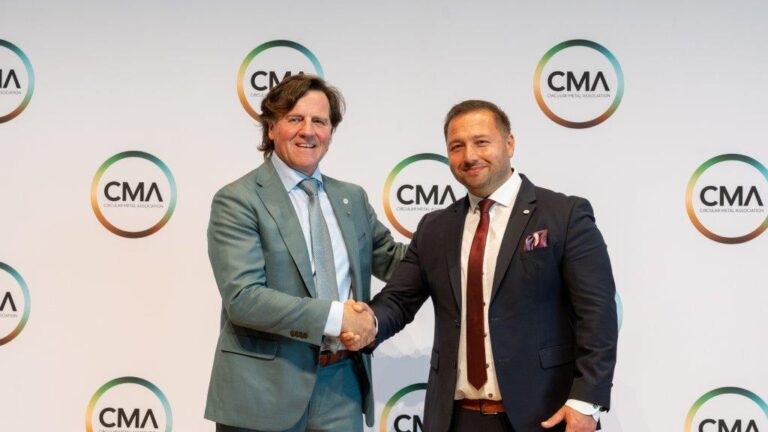
“The study confirms what our member companies experience every day: Europe does not lack recycled raw materials, but rather the conditions under which they can be competitively processed here,” says CMA President Murat Bayram. “Export restrictions do not solve this problem. Those who restrict exports drive down prices – and then collecting complex materials, in particular, often no longer pays off. In the end, the industry would have fewer raw materials, not more – precisely the opposite of what it hopes for. Recyclers and industry are in the same boat. Together we can make faster progress. For this, we need solutions that strengthen both. Only then can the circular economy in Europe be expanded.”
__________________________
About the Circular Metal Association (CMA)
The Circular Metal Association is Europe’s leading industry association for steel and metal recycling. Nearly 900 member companies cover the entire spectrum: from collection and processing to trading and supplying the metal and steel processing industries. Around 90 per cent of the industry companies active in the market are organised within the CMA. Its members supply the recycled raw materials with which European industry works – and are thus an indispensable part of the European raw material industry. The CMA was formed from the merger of the German Steel Recycling and Waste Management Association (BDSV) and the Association of German Metal Traders (VDM).
We create certainty.