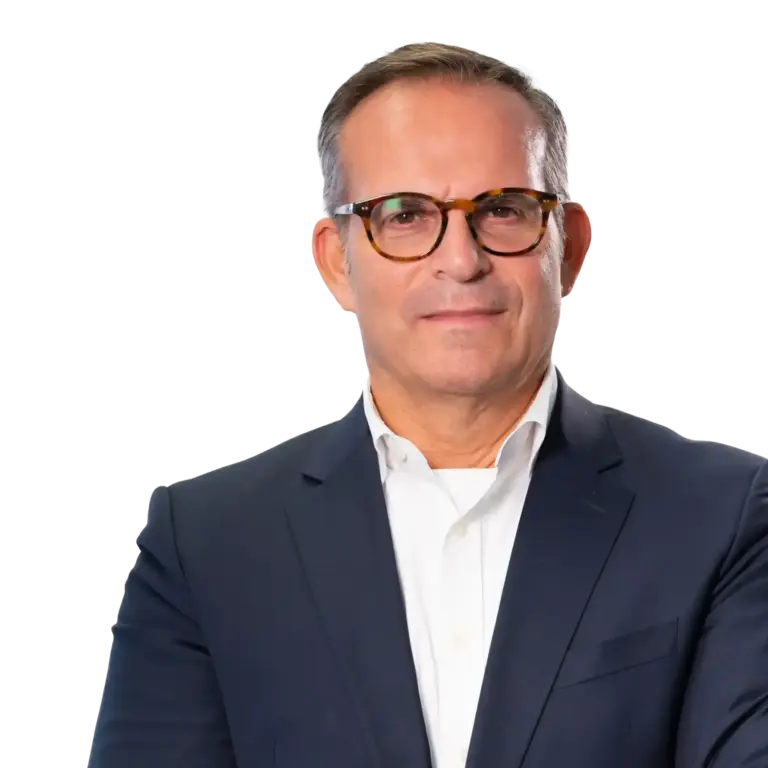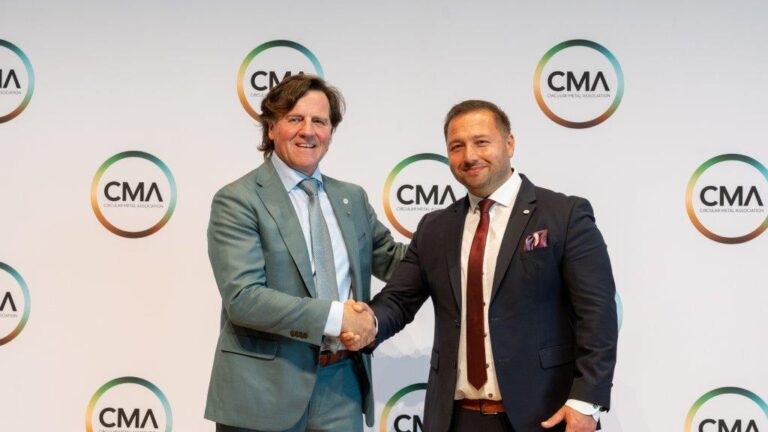
At E-Waste World on 17 and 18 June in Frankfurt, the recycling industry, the aluminium industry, and the EU Commission discussed recycled aluminium. CMA President Murat Bayram advocated for open markets and cooperation along the value chain.
Isabelle Radovan from Recycling Europe kicked things off with a clear assessment. One tonne of recycled aluminium replaces eight tonnes of bauxite and 14,000 kWh of energy, prevents 7.6 cubic metres of landfill space, and reduces the CO₂ footprint by 92 per cent compared to primary raw material production. European recycling companies collect and process 6.2 million tonnes of recycled aluminium annually.
Radovan made it clear that increases in exports were primarily a consequence of insufficient European demand pressure. She warned: trade restrictions between member states must be resolved by EU-wide end-of-waste criteria that enable an uncomplicated flow of goods within the EU. Her appeal: free and fair trading conditions for scrap, as well as a coherent policy that aligns exports with European demand.
In the subsequent expert discussion, CMA President Murat Bayram warned of the consequences of political uncertainty. The aluminium industry was fomenting uncertainty in the recycling industry – and that was ‘poison for business’. Nevertheless, recycling companies were investing heavily in their operations despite difficult conditions. Bayram’s motto: ‘We must not build higher walls – we must build bridges.’
Sandra Nebe, Head of Trade and Industry at the European Commission, reported on 254 consultation contributions that reflected the picture of opinions: clearly divided between the recycling industry on one side and the producing aluminium industry on the other. She assured that she wanted to find the right balance – ‘without creating major disadvantages for either side’.
Dr. James Watson, Director General of European Metals, focused on the international dimension. Many third countries had already introduced trade restrictions; Europe must prevent capital from migrating out of the system and abroad. The aluminium industry had been fighting for its competitiveness for years – and needed higher collection rates to be able to grow.
The recycling industry countered: anyone demanding trade restrictions for scrap must logically also include semi-finished products and other aluminium products such as ingots and pre-products, as these are also exported in significant quantities – which could hardly be in the interest of the European aluminium industry. Individual links in this value chain must not be treated in isolation and differently. Around 20 per cent of recycled aluminium goes outside Europe. Net, i.e., after deducting imports, it is only around 10 per cent. These are essentially qualities for which there is insufficient demand within Europe.
Sebastian Will, a member of the bvse Executive Board and Deputy Chairman of the bvse Specialist Association for Scrap, E-scrap and Vehicle Recycling, also criticised the slow implementation of the digital waste shipment regulation (DIWASS) and the lack of transparency in applications from third countries for notification, which was still pending from official EU side. Structural shortcomings such as lengthy approval procedures and high ancillary wage costs were issues that both sides should address together.
Sandra Nebe clarified that the European Commission had not been able to identify any criticality of aluminium scrap in its investigations. The Commission was carefully analysing the value chain; measures had to be prioritised. She passed the ball on: ‘The use of trade restrictions now lies with the European member states – how they stand on this is essential.’
In the final round, the recycling industry made it unequivocally clear: a free market is vital for the industry’s survival. Domestic buyers clearly take precedence over the export market – due to lower logistical effort, faster loading, and less risky payment processing.
Murat Bayram reaffirmed the willingness to engage in dialogue: ‘The recycling industry does not want to close doors, but to open them for a conversation.’ Working together for the circular economy creates a win-win situation – whereas trade restrictions inevitably lead to a lose-lose situation. ‘A constructive exchange costs nothing. But with trade restrictions, all parties involved would have to dig deep into their own pockets.’
Sebastian Will concluded with a double appeal: to the aluminium industry, to abandon narratives and recognise that trade restrictions ‘close the windows for both sectors’ – and to Sandra Nebe, to also inform DG ENV, responsible for EU environmental policy, about the results of this discussion. His concluding plea to the European Commission was brief and unequivocal: ‘The very good option – leave it.’