A legal opinion commissioned by CMA and bvse and prepared by the law firm okl & partner concludes that the planned restrictions on metal scrap exports via the EU Member State list would be legally challengeable. The associations demand a revision of the draft.
Berlin, Düsseldorf, Brussels, 21/10/2026 – With the list of countries, the Commission determines which non-hazardous waste may still be exported for recovery to countries outside the EU and the OECD from 21 May 2027. For ferrous and non-ferrous metal scrap, the draft proposes not to permit exports to most applicant states. The Commission justifies this by citing potential heavy metal content and environmental risks during processing.
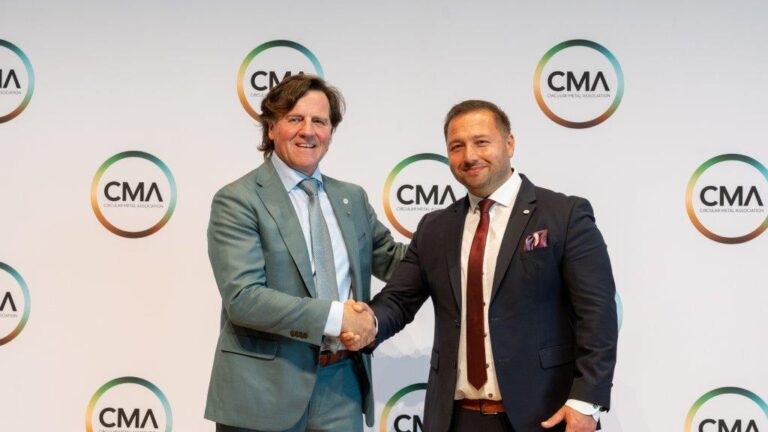
‘The legal opinion shows that by restricting scrap exports, the Commission is exceeding the limits of the Waste Shipment Regulation,’ explain CMA Managing Director Guido Lipinski and bvse CEO Eric Rehbock. ‘A legal act with so many flaws must not be enacted in this form.’
Legally challengeable on several counts
CMA and bvse view the Commission’s proposal critically on several points. The legal opinion supports this assessment and identifies a series of legal errors.
The fundamental objection concerns the assessment standard. Under Article 39 of the Waste Shipment Regulation, waste with hazardous properties is generally prohibited from being exported to non-OECD countries. The list of countries exclusively regulates the export of non-hazardous waste. If the Commission nevertheless justifies its decision with heavy metal risks, the legal opinion argues it is citing hazards that cannot legally exist in the waste concerned.
‘The draft treats metal scrap as if it were hazardous waste. It is not, and the European legislator sees it that way too,’ says Lipinski. ‘The Commission is justifying its decision with risks that it has no authority to decide upon via the list of countries.’
The associations also believe that proportionality is not maintained. In future, exports may only go to facilities that have passed an independent audit. This audit is based on the requirements of EU law and the best available techniques. ‘An additional, blanket ban on metal scrap is, as the legal opinion clearly points out, not necessary at all,’ emphasises Rehbock.
According to the legal opinion, there is the additional fact that the legislator included the metal waste concerned in the Green List, thereby attributing a low hazard potential to it. The Commission cannot undermine this decision in a delegated act. Furthermore, according to the legal opinion, it deviates without justification from the Basel Technical Guidelines on metal recycling (R4), which belong to the assessment standard under Annex IX of the Regulation and clearly distinguish between simple processing and thermal processes.
CMA and bvse also view it as critical that the Commission is imposing blanket restrictions on all metal fractions, even though they differ significantly in their environmental profile. According to the legal opinion, the Commission also has no scope for blanket rejections when including countries in the list. If a state meets the requirements of the Regulation, it must be included.
Finally, according to the legal opinion, there is clear evidence that the restriction serves a purpose other than environmental protection in the destination country. The Commission presented the draft shortly after it had abandoned planned export duties on aluminium scrap. The aim seems to be to prevent the outflow of secondary raw materials from the EU – a trade policy concern for which the Waste Shipment Regulation provides no basis.
Also the wrong approach economically
The associations also warn of the economic consequences. The European market does not absorb all processed metal volumes; international buyers are an important sales channel for these surpluses. A restriction of these markets would therefore not only hit trade but also make the financing of collection and processing more difficult. Ultimately, less secondary raw material would be available to European industry.
Furthermore, the debate over export volumes masks the actual structural problems of European metal processing. Where domestic buyers are lacking, additional demand cannot be forced by an export ban. Competitive production conditions and an economically viable use of secondary raw materials are decisive.
‘The EU wants to strengthen its industry, but is starting at the wrong point with export restrictions. If metal scrap is not processed in Europe, we need to talk about energy prices, production costs, and investment conditions – not about artificially closed sales markets. The Commission should enable demand for secondary raw materials instead of economically weakening recycling companies,’ says Sebastian Will, member of the executive committee of bvse-Recycling Germany.
‘Anyone who wants to strengthen the circular economy must not pull the rug out from under those who keep it running every day,’ explains CMA President Murat Bayram. ‘Constant new proposals from Brussels are making work difficult for one of the few functioning sectors, of all things. Our SMEs need planning certainty and sales markets – instead, uncertainty grows with every new hurdle. Anyone who now also closes off sales markets risks less being collected and recycled, and ultimately less recycled metal being available to Europe’s industry. When will we finally stop deciding over the heads of companies? When will we sit down together and develop measures that work in practice? Europe’s circular economy grows from entrepreneurial achievement. Policy must pave the way for it.’
CMA and bvse call on the Commission to revise the draft and to include countries that meet the requirements of the Regulation in the list for metallic waste as well. Both associations are counting on a correction during the current proceedings. Should the list be enacted in this form, they intend to consider legal action.
__________________________
About the Circular Metal Association (CMA)
The Circular Metal Association is Europe’s leading industry association for steel and metal recycling. Nearly 900 member companies cover the entire spectrum: from collection and processing to trading and supplying the metal and steel processing industries. Around 90 per cent of the industry companies active in the market are organised within the CMA. Its members supply the recycled raw materials with which European industry works – and are thus an indispensable part of the European raw material industry. The CMA was formed from the merger of the German Steel Recycling and Waste Management Association (BDSV) and the Association of German Metal Traders (VDM).
We create certainty.